
By Arno Lampmann · Published
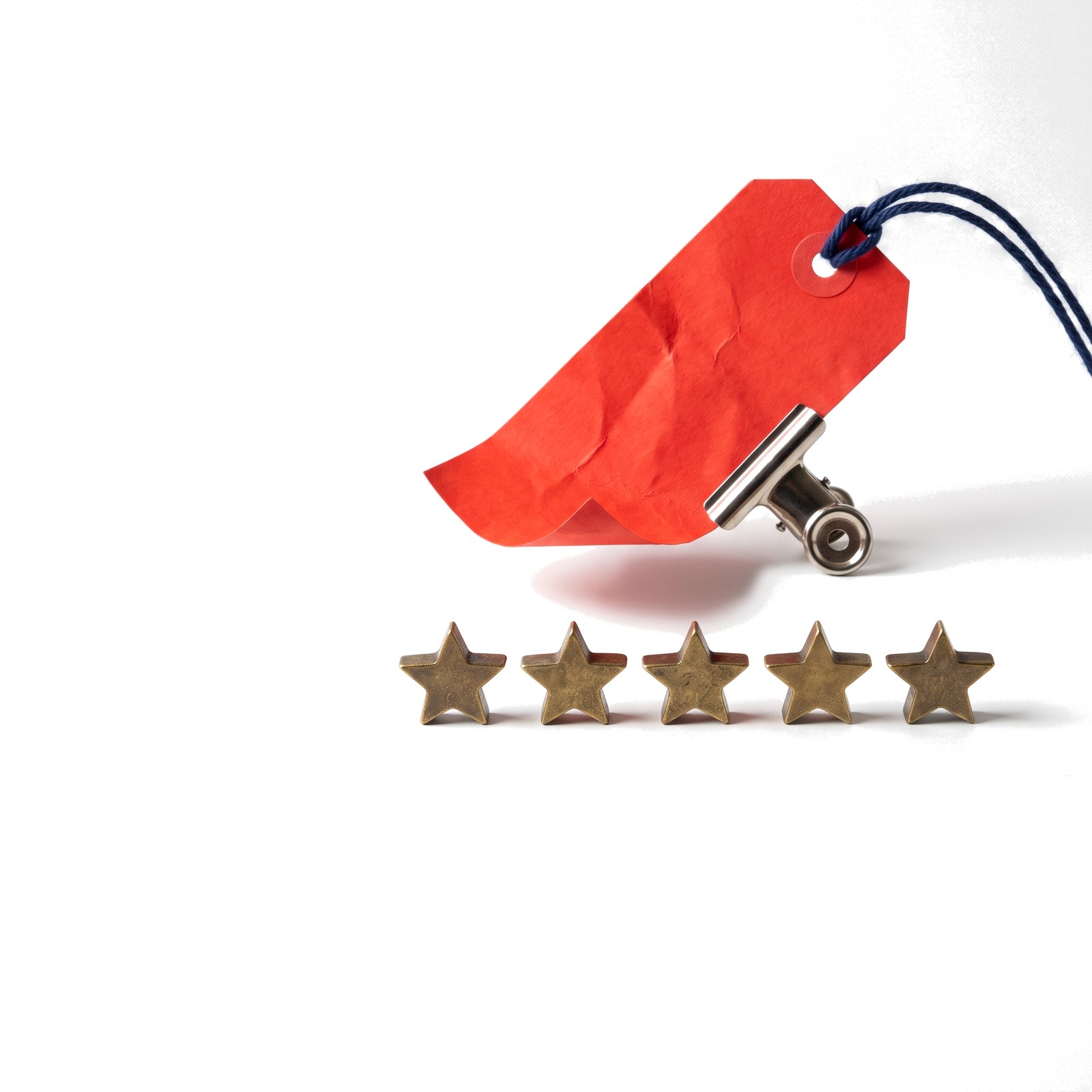
MagazinneuA red notice above the company profile, the stars hidden: Trustpilot accused our client of manipulating reviews. Which reviews, by whom and how, the platform did not say.
In brief
- Outcome
- The Trustpilot consumer warning on our client’s profile disappeared after a few months and the TrustScore is visible again. Trustpilot gave neither reasons nor a cease-and-desist undertaking.
- Reason
- Trustpilot presented manipulation as an established fact, yet admitted that its filter also catches genuine customers and could not attribute the reviews to anyone.
- Consequence
- Businesses receiving such a notice should act quickly, keep every message and demand a statement of reasons under Art. 17 DSA.
A few months later the notice was gone again, as silently as it had appeared. What happened in between shows how a Trustpilot consumer warning can be removed and where the limits lie.
Removing a Trustpilot consumer warning: what is it?
With a “Consumer Warning”, Trustpilot tells visitors to a business profile that the platform has identified misuse there, usually in the form of fake reviews. At the same time the TrustScore disappears, review invitations stop working and review data is no longer shared with search engines. For a business that sells online, this works like a public pillory with a built-in loss of revenue.
We have written about warning notices on review platforms in general (in German). The following case shows what such a dispute looks like in practice when the platform answers letters with standard text for months.
The case: warning notice, TrustScore gone, no reasons given
Trustpilot placed a notice on our client’s profile stating that fake reviews had been identified there. The TrustScore disappeared and review invitations stopped working. Asked about it, the platform said, in substance, that this was not a suspicion but a definitive finding.
At the same time Trustpilot conceded that a review is filtered even where the customer really exists and really made a purchase. It could not say who was behind the flagged reviews and had not been able to identify any third-party involvement. Nor would it say which reviews were affected at all.
Trustpilot declined our client’s offer to give access to its customer records or to allow any other suitable check. How long the notice was to remain, the platform did not answer consistently in the course of the correspondence.
May Trustpilot warn of “fake reviews” without evidence?
Under German law a review platform may warn of manipulated reviews, but only under the conditions the courts have developed for reporting on suspicions. There must be a minimum body of evidence, a prior hearing of the business on the specific allegations, wording that presents the suspicion as a suspicion, and a time limit. A notice that presents manipulation as an established fact without proving it infringes the business’s right of personality.
The Higher Regional Court of Frankfurt am Main (Oberlandesgericht Frankfurt) did uphold a warning notice on a doctor’s profile on Jameda as a permissible expression of suspicion (order of 19 November 2020, case no. 16 W 37/20), as we reported (in German). That notice, however, was cautiously worded and limited to “irregularities” in individual reviews. Nobody spoke of a definitive finding.
Here Trustpilot had supplied the arguments against its own notice. It asserted a fact, yet admitted that its filter catches real customers with real purchases, and it could attribute the reviews to nobody, least of all to the business. Its own guidelines require, for a notice of this kind, that the business wrote or procured the reviews itself. That is exactly what Trustpilot never showed.
The injunctive claims follow from Section 1004 by analogy in conjunction with Section 823(1) of the German Civil Code (BGB). For the assertion that reviews are fake, Section 824 BGB (damage to credit) is also relevant. That a platform is liable to cease and desist if it fails to examine content despite specific notice has been settled since the Jameda judgment of the Federal Court of Justice (Bundesgerichtshof, judgment of 1 March 2016, case no. VI ZR 34/15). The warning notice is an even clearer case, because it is not a third party’s review but the platform’s own statement.
What the Digital Services Act requires
Under the Digital Services Act (DSA), a platform that demotes content or restricts an account must give the person affected a clear and specific statement of reasons under Art. 17 DSA. This includes the facts relied on and, where a contract is terminated for breach, the contractual provision said to have been breached. In our view, a statement that merely refers to “patterns” and “technical indicators” does not meet that standard.
Once the internal complaint procedure under Art. 20 DSA has been exhausted, out-of-court dispute settlement under Art. 21 DSA and a complaint to the competent Digital Services Coordinator under Art. 53 DSA are available. Neither route is subject to an urgency deadline, and both are inexpensive.
Strategy: from standard replies to an answer on the merits
We sent Trustpilot a formal cease-and-desist letter, demanding removal of the notice and an undertaking backed by a contractual penalty, together with the agreement and the applicable version of the terms. The deadline passed. Our first reminder produced an automated reply citing a high volume of enquiries and kindly suggesting a visit to the help centre.
Only after we had set a final deadline and also addressed the reminder to the point of contact every platform must designate under Art. 12 DSA did the Enforcement team respond on the merits. Trustpilot stood by its decision and declared the matter closed. The letter did at least name a date for reassessment and repeated to lawyers the concession about filtered genuine customers.
Our reply held Trustpilot to its own standards: several pages of reasoning without a single sentence attributing the reviews to our client, and a demand that we prove third-party involvement while the platform refuses to say which reviews it means. We asked for a statement of reasons under Art. 17 DSA and binding confirmation of the date and criteria of the reassessment.
No answer came. Shortly afterwards the warning had disappeared and the TrustScore was visible again. Trustpilot informed neither our client nor us. Whether our pressure, the reassessment that was due anyway or both made the difference, we do not know, and we do not claim otherwise. Trustpilot has not given an undertaking.
What businesses in the same situation can do
- Act at once: a preliminary injunction requires urgency, which many German courts treat as lost about one month after the business becomes aware of the measure. A complaint to the platform does not stop that clock.
- Keep every message from the platform, including automated ones, and ask specific questions: which reviews, which allegation, which contractual provision.
- Demand a statement of reasons under Art. 17 DSA and the agreement together with the applicable terms. Whatever the platform refuses becomes an argument later.
- Use the out-of-court routes under the DSA, which are quick and inexpensive.
- Before using the invitation tool again, agree in writing how review invitations may be sent.
The warning is gone. The certainty that it will not return is missing. Without an undertaking from the platform, a business lives with the platform’s assessment, and that assessment can change at any time.
Frequently asked questions
What does a Trustpilot consumer warning on a business profile mean?
Trustpilot uses it to tell visitors that it has identified misuse on the profile, usually fake reviews. At the same time the TrustScore is hidden, review invitations are stopped and data is no longer shared with search engines.
May Trustpilot warn of fake reviews without evidence?
Under German law only within the limits that apply to expressions of suspicion: there must be tangible indications, a prior hearing, cautious wording and a time limit. Presenting manipulation as a fact without being able to attribute it to the business infringes its right of personality.
How long does a Trustpilot consumer warning stay on a profile?
Under Trustpilot’s guidelines usually several months, after which the profile is reassessed. The platform does not accept any right to early removal and is reluctant to disclose the criteria of the reassessment.
What rights does the Digital Services Act give against Trustpilot?
Under Art. 17 DSA the platform must give a specific statement of reasons, including the facts and the contractual provision allegedly breached. After the internal complaint procedure, out-of-court dispute settlement under Art. 21 DSA and a complaint to the Digital Services Coordinator are available.
What should a business do first after a Trustpilot consumer warning?
Keep every message, ask Trustpilot specifically which reviews and which allegation are meant, and demand a statement of reasons under Art. 17 DSA. Anyone considering a preliminary injunction in Germany must act within about one month.
Has Trustpilot placed a warning on your business profile?
We assess whether the notice is justified and which routes are open, out of court and before the courts. You will usually receive an initial assessment within 24 hours.
Further information
- Warnhinweis Jameda & Trustpilot (in German)
- Praxisbeispiel: Bewertungen auf Trustpilot (in German)
- Removal of negative reviews
- Reputation management
- Our successes (in German)
Bild: LHR
